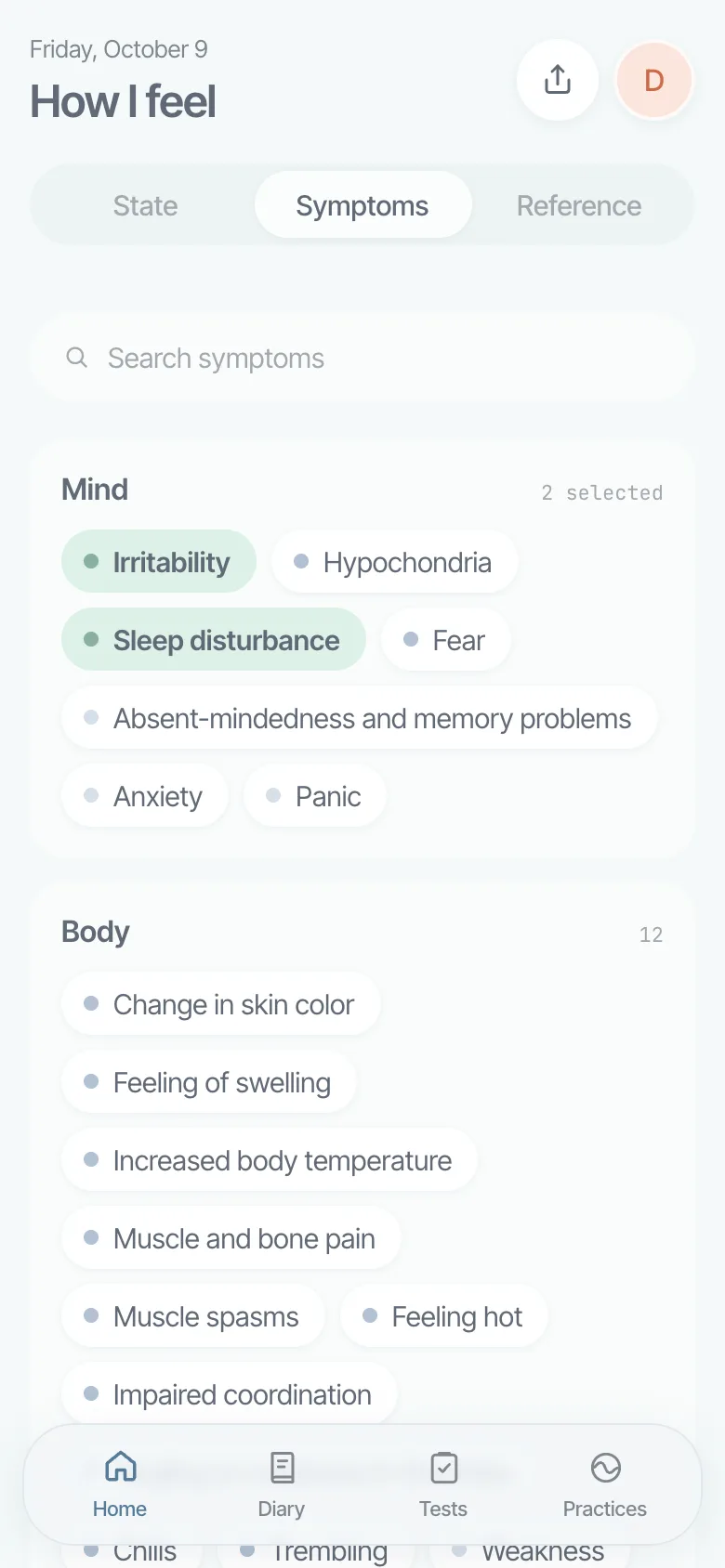
46 symptoms in eight groups
The catalog covers symptoms that people with anxiety and depression often report, written in plain words:
- Mind: panic, fear, anxiety, irritability, sleep disturbance, hypochondria, absent-mindedness and memory problems.
- Body: trembling, sweating, chills, weakness, muscle pain, tingling or numbness and more.
- Heart and breathing: rapid heartbeat, pain in the heart area, shortness of breath, a lump in the throat.
- Head: headache, dizziness, changes in blood pressure, a feeling that the world isn’t real.
- Digestive, reproductive and urinary systems: nausea, loss of appetite, abdominal pain, lower libido, frequent urination.
Context for each symptom
Open any symptom to see how often people report it, why it can happen and what may ease it. You can’t add custom symptoms; everything comes from the shared catalog, which keeps the charts comparable over time.
Rate in one tap, read the trend later
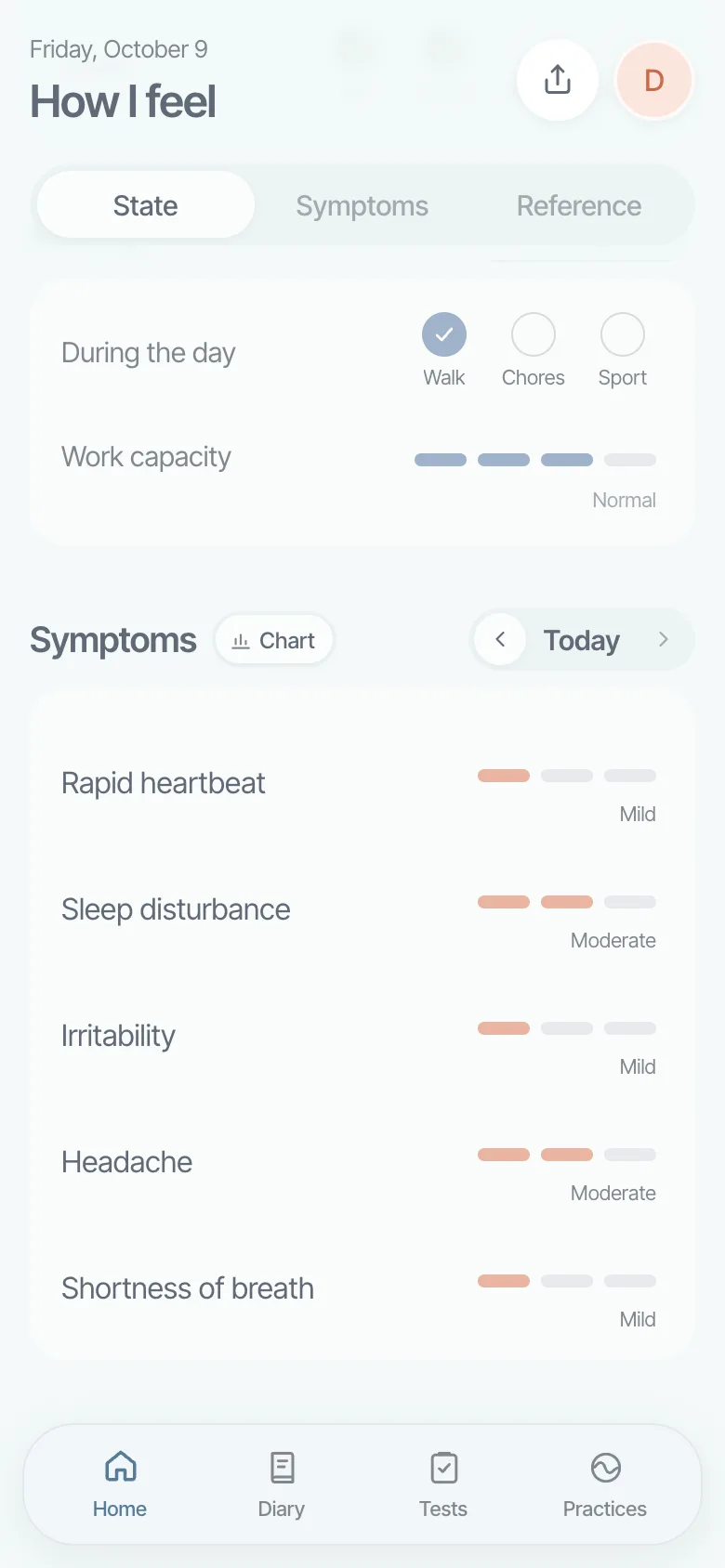
Each symptom has four levels: none, mild, moderate and severe. Tap to set today’s level, or switch to an earlier day if you forgot. A daily reminder at 6 pm is on by default.
The chart view shows every symptom across past days, and the intensity chart shows the overall picture by week, month, quarter or all time. After a few weeks you can see whether your heart races less often, or whether stomach pain comes on the same days as anxious thoughts.
Read how others experience the same symptom
Below each symptom you’ll find comments from other Katheris users who live with it: what it feels like for them, when it gets worse and what helps. You can add your own experience too. Other people see only a short user ID, never your name, email or Telegram details.
Like the comments that helped you, and report anything harmful. A comment with more than three reports is hidden automatically. Comments are personal experience, so talk to your doctor before changing your treatment because of something you read.
Tracking alongside tests and a journal
Symptom ratings show day-to-day changes. The weekly GAD-7 and PHQ-9 tests give a standard score for anxiety and depression, explained on the anxiety tracker and depression tracker pages. For the situations behind a bad day, use the voice CBT journal.
Some of these symptoms, such as chest pain, shortness of breath or changes in blood pressure, can also have physical causes. Tell a doctor about new, severe or worsening symptoms. Katheris records what you feel and doesn’t diagnose its cause. If you’re in crisis, contact your local emergency services.