What you can track
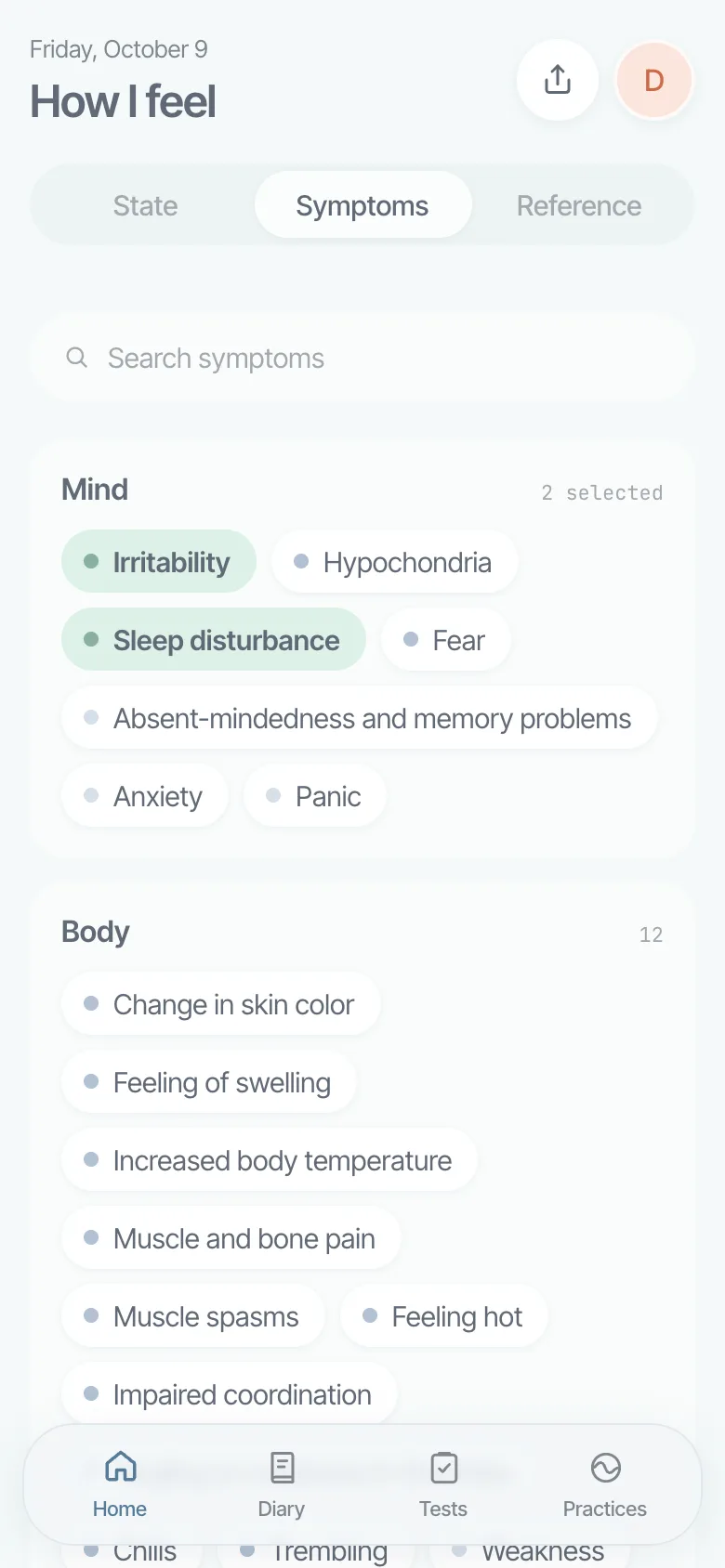
Anxiety often shows up in the body before you put a name to it: a racing heart, a lump in the throat, shallow breathing, nausea, trembling or a night of broken sleep. Katheris has a catalog of 46 symptoms, grouped into mind, body, heart, breathing, head and the digestive, reproductive and urinary systems. You choose the ones you notice and add them to your list.
A rating for each symptom
Every day you mark each symptom as none, mild, moderate or severe. It takes a few seconds. If you miss an evening, pick yesterday in the calendar and fill it in. Each symptom also has a short note on how common it is, why it can happen and what may ease it, so a new sensation feels less like a mystery. The symptom tracker page explains the catalog and charts in more detail.
The GAD-7 score
GAD-7 is a standard seven-question anxiety questionnaire that doctors use for screening. It asks about the last two weeks and gives a score from 0 to 21: up to 4 is minimal, 5 to 9 mild, 10 to 14 moderate and 15 or more severe. Katheris asks it together with the PHQ-9 depression questionnaire, suggests taking them once a week and plots every result, so you can compare this month with the last one.
Why track anxiety for longer than a few days
Anxiety tends to ease slowly and unevenly. One rough day can make a whole good week feel lost, and memory holds on to the worst moments. A regular record gives you something firmer than an impression: which symptoms have faded since you started therapy or medication, which ones stay, and whether spikes line up with busy weeks or poor sleep.
The record also helps at appointments. A psychiatrist or therapist usually has a short slot and depends on what you remember. With Katheris you can send a private link to your charts before the visit. More on that on the depression tracker page.
How to start
- Open Katheris in your browser, on iPhone or in Telegram and create an account.
- Pick the symptoms you notice most. The free plan tracks up to five at a time, and Pro raises that to twenty.
- Take your first GAD-7 and PHQ-9 test. It takes three to five minutes.
- Rate your symptoms each evening. A reminder comes at 6 pm by default, and you can move it or turn it off.
Katheris is a self-tracking tool. A test score or a list of symptoms is not a diagnosis, and the app doesn’t treat anxiety or depression. If your state is getting in the way of daily life, talk to a doctor or psychologist. If you’re in crisis, contact your local emergency services.