What Katheris tracks for depression
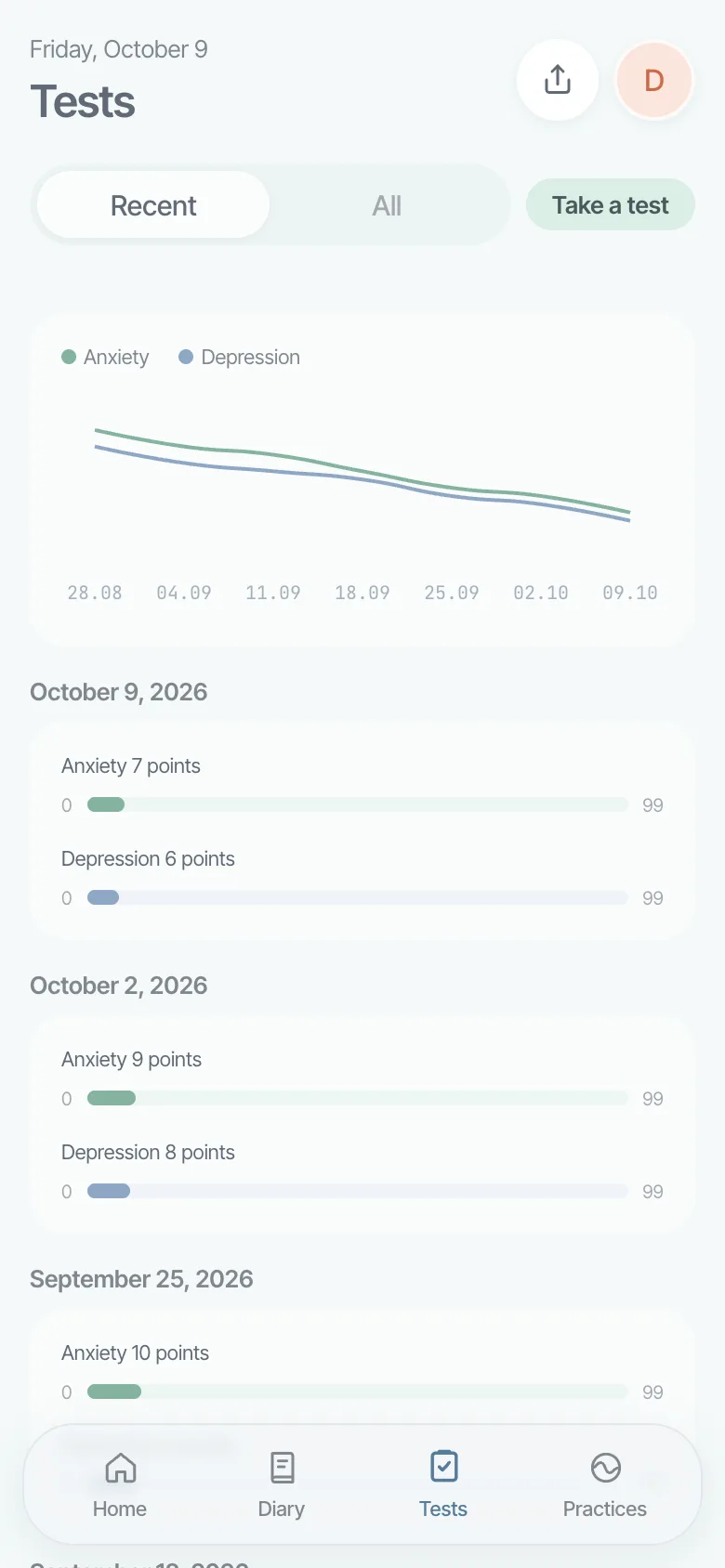
PHQ-9 once a week
PHQ-9 is a nine-question depression questionnaire used in clinical practice. It covers the last two weeks and gives a score from 0 to 27, grouped as minimal, mild, moderate, moderately severe and severe. Katheris asks it together with the GAD-7 anxiety questionnaire, keeps every result and shows whether your score is stable, rising or falling.
Symptoms in the body and mind
Depression is more than low mood. Sleep disturbance, loss of appetite, weakness, irritability, poor concentration and lower libido are all in the catalog of 46 symptoms. You rate the ones you have each day from none to severe, and the chart shows how they change by week, month or quarter. See the symptom tracker for the full list of groups.
Meals and daily activity
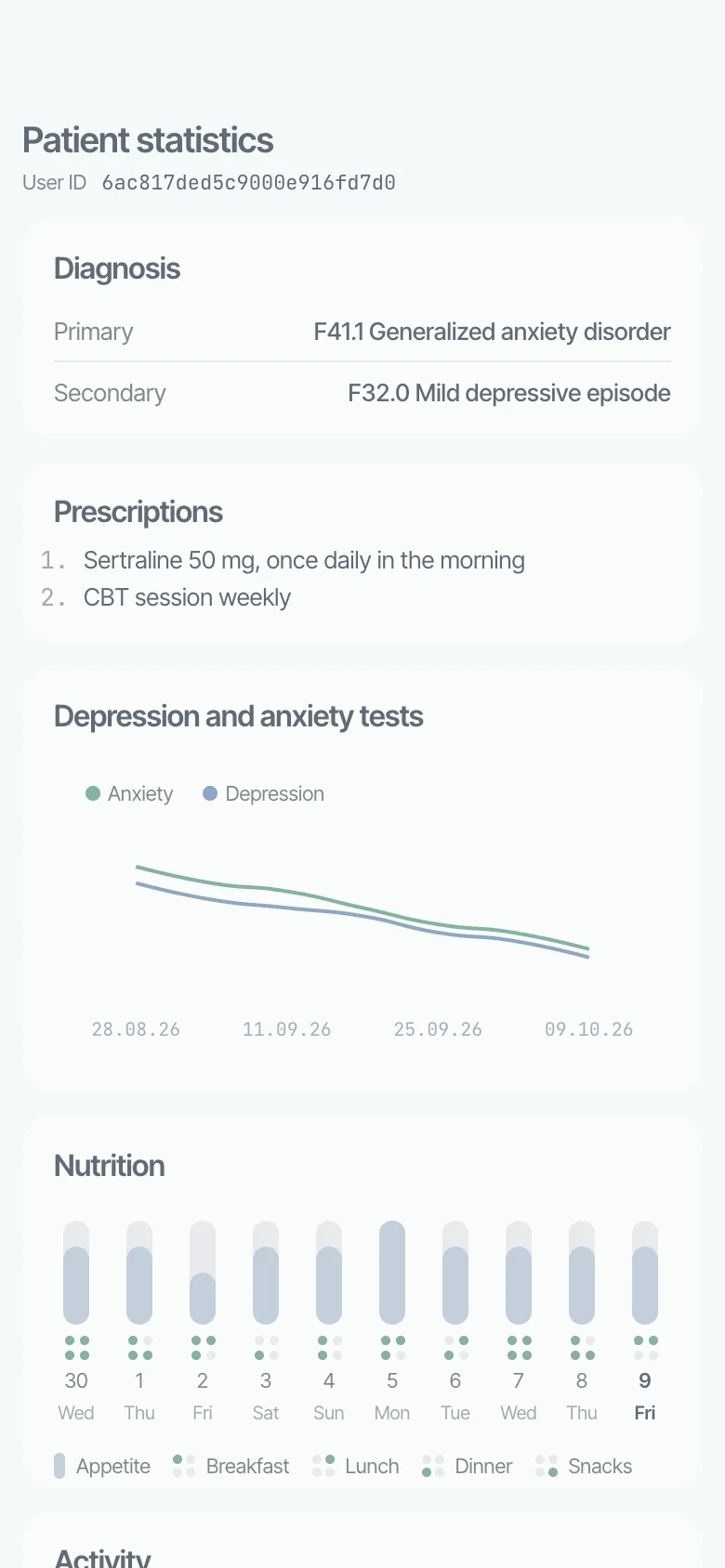
On heavy days even small routines slip, and that is worth seeing. Tick off breakfast, lunch, dinner and snacks, and note whether you went for a walk, did household chores or played sport. The activity chart sits next to your symptoms, so you can see whether a better week also had more walks and regular meals.
Why long-term tracking helps
Improvement with depression is usually gradual and uneven. A good day fades from memory faster than a bad one, and as some symptoms ease, attention moves to others. Some people decide that therapy or medication isn’t working and stop just as things begin to change. A few minutes of tracking each week gives you a trend line to look at instead of the impression left by the last few days.
How to start
- Open Katheris in your browser, on iPhone or in Telegram.
- Take the first PHQ-9 and GAD-7 test to get a starting point.
- Add the symptoms you notice and, if you like, your diagnosis and prescriptions in the Therapy section.
- Check in each evening. Evening reminders for symptoms and for meals and activity can be moved or turned off.
Katheris is a self-tracking tool. A test score or a list of symptoms is not a diagnosis, and the app doesn’t treat anxiety or depression. If your state is getting in the way of daily life, talk to a doctor or psychologist. If you’re in crisis, contact your local emergency services.