What a CBT thought record is
Cognitive behavioural therapy looks at how a situation, the thoughts it triggers, the emotions that follow and what you do next affect each other. A thought record is a common CBT exercise: you write down a difficult moment and split it into those parts. Seeing the facts apart from the thoughts about them makes patterns easier to spot, such as jumping to the worst outcome or reading criticism into a neutral message.
The hard part is filling in a form when you’re upset. Talking is easier, so Katheris lets you talk.
How the voice journal works
- Press record in the app, in the browser or on iPhone, or send a voice message to the Katheris bot in Telegram.
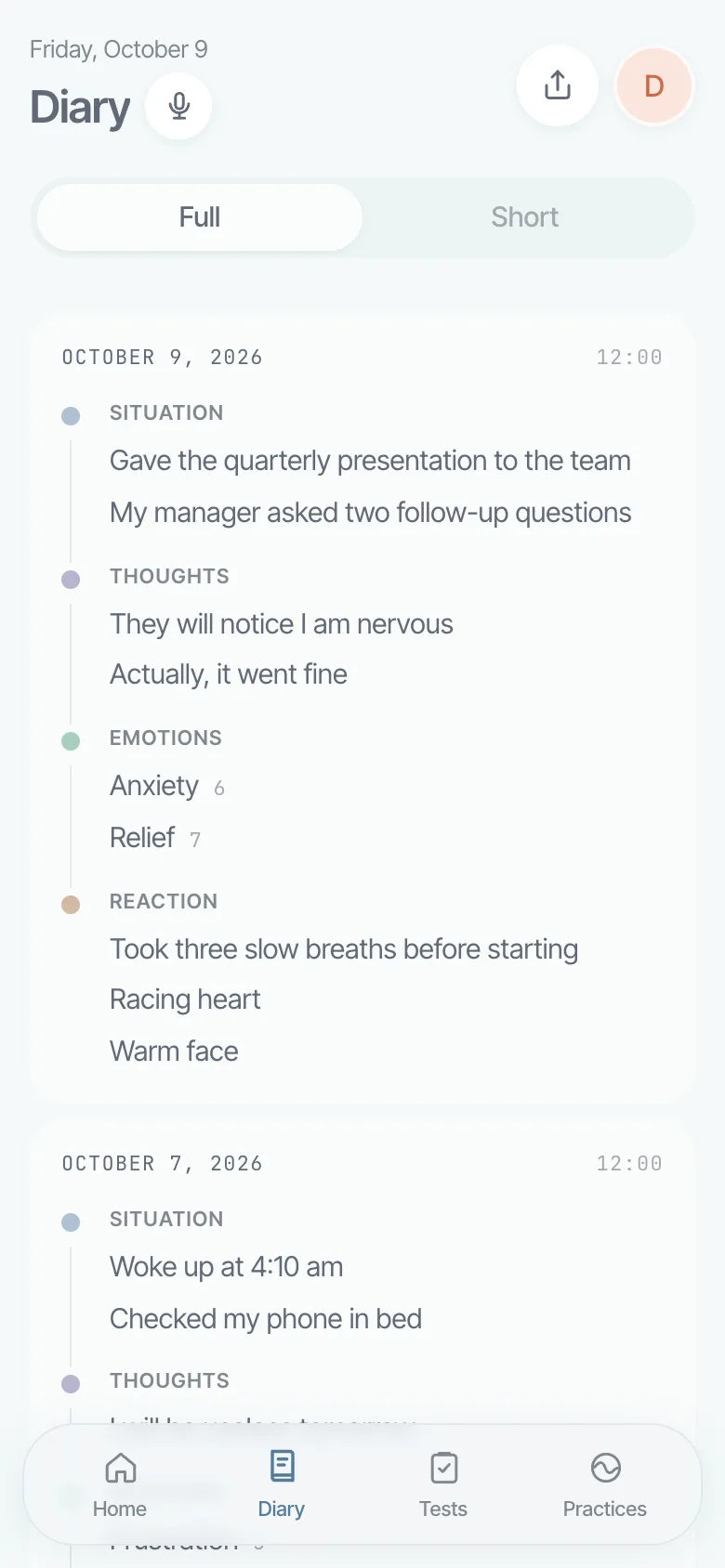
- Your speech is transcribed, and the text is sorted into four parts: situation (only the facts), thoughts (in your own words), emotions with their intensity, and reaction (what you did and felt in your body).
- In Telegram you see the entry first and choose whether to add it to your diary. In the app it goes straight to the diary, where you can open or delete it.
Entries are created from voice notes only; there is no typed input. You can switch the diary between a short and a full view.
What the AI is used for
Katheris uses AI for one task: sorting your transcribed words into the four parts of a thought record. It is instructed to use only what you said and to add no diagnoses, advice or interpretations. Katheris is not a chatbot, and you can’t have a conversation with it. If you want help working through an entry, take it to a therapist.
Privacy of voice notes
The audio is sent to Groq for speech recognition and is not kept after transcription. The text is sent to OpenAI to structure the entry. Katheris doesn’t sell your data or use health records for advertising, and diary entries are not included in the report you can share with a doctor. Details are in the privacy policy.
Katheris is a self-tracking tool. A test score or a list of symptoms is not a diagnosis, and the app doesn’t treat anxiety or depression. If your state is getting in the way of daily life, talk to a doctor or psychologist. If you’re in crisis, contact your local emergency services.