Anxiety and depression tracker Notice how you feel. Watch it change.
Katheris is a mental health tracker for people living with anxiety and depression. Log your symptoms each day, take the GAD-7 and PHQ-9 tests once a week and keep a CBT journal by voice, so progress you can’t feel day to day becomes visible.
Free in the browser, on iPhone and in Telegram. See how it works
Why it feels like nothing helps
Progress in therapy is easy to miss
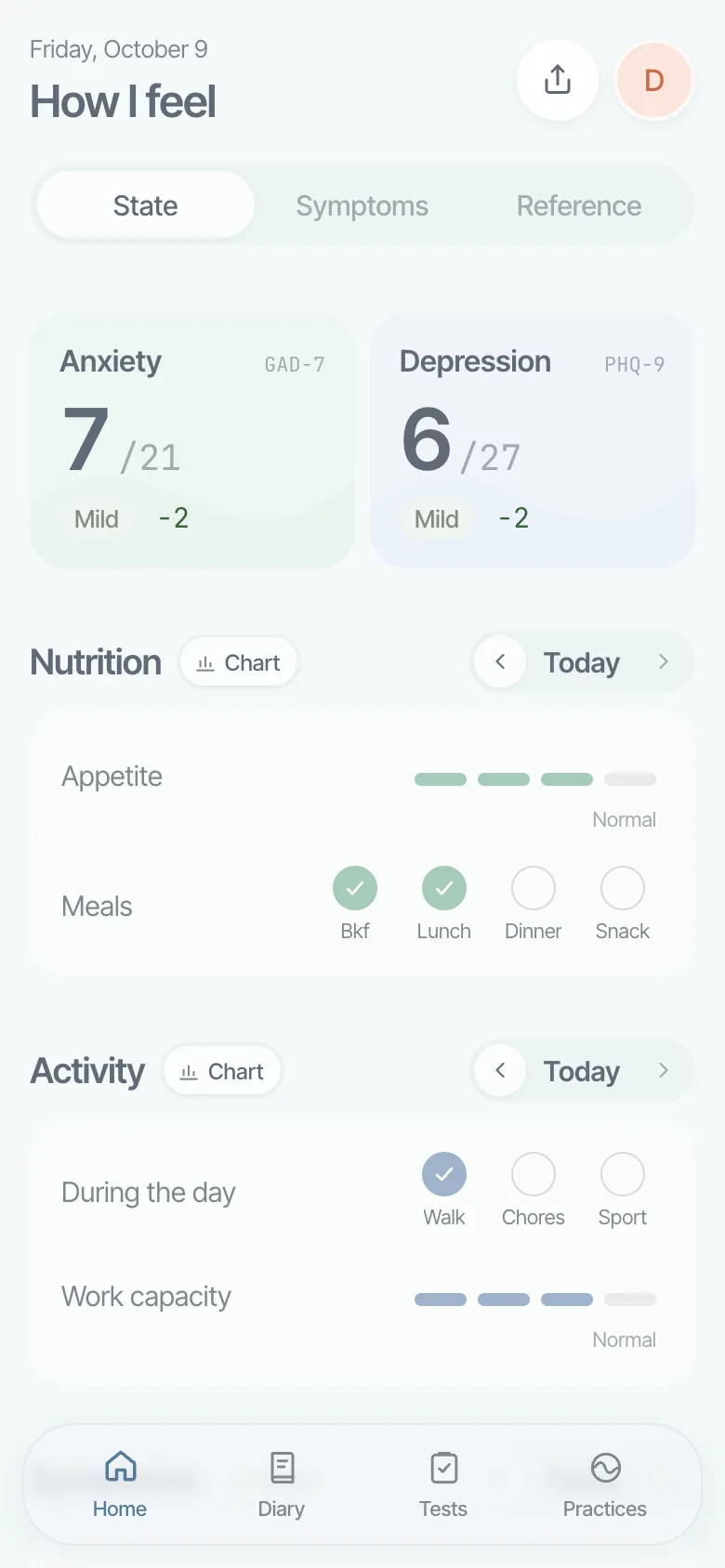
Recovery from anxiety and depression is gradual and uneven. A good day fades from memory, a bad one stays for weeks. And as some symptoms ease, attention shifts to others that used to stay in the background.
So many people decide that therapy or medication isn’t working, and stop right when things have started to improve. Katheris keeps what memory doesn’t: regular check-ins show the real trend, not the impression of the last few days.
How Katheris works
Katheris is for people with a diagnosis from a doctor or psychotherapist. Most check-ins take about a minute.
-
Choose what to track
Pick the symptoms you notice from a catalog of 46 and take your first GAD-7 and PHQ-9 test to get a starting point.
-
Check in each evening
Rate each symptom from none to severe, tick off meals and activity, and record a voice note when something is on your mind.
-
Watch the trend
After a few weeks the charts show which symptoms are fading. Before an appointment, send your doctor a private link to them.
Name what your body is doing
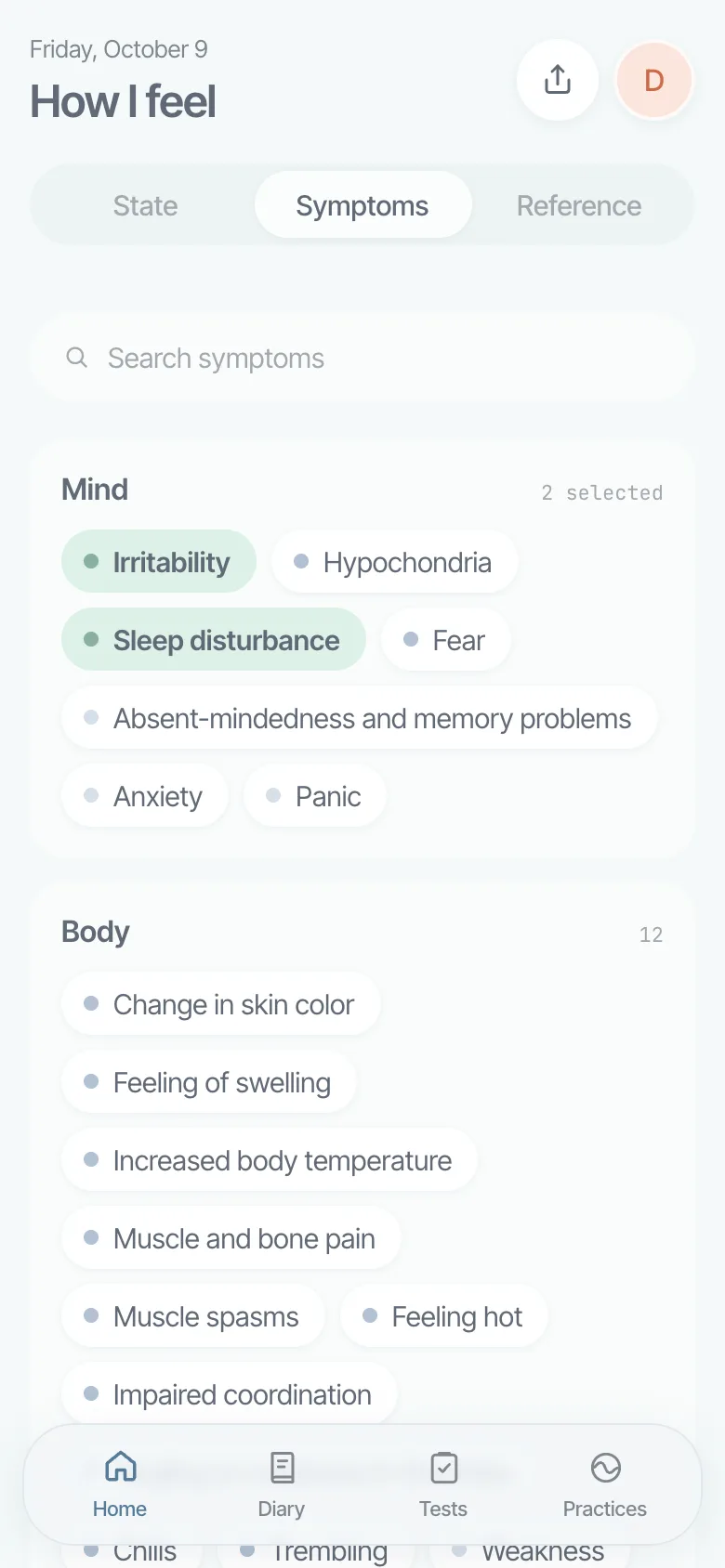
Racing heart, tight chest, broken sleep: anxiety often shows up in the body first. Pick the symptoms you notice from 46 common ones, grouped by mind, body, heart, breathing and more.
Darker dots mark the symptoms people with anxiety report most often. How symptom tracking works
Rate each symptom in one tap
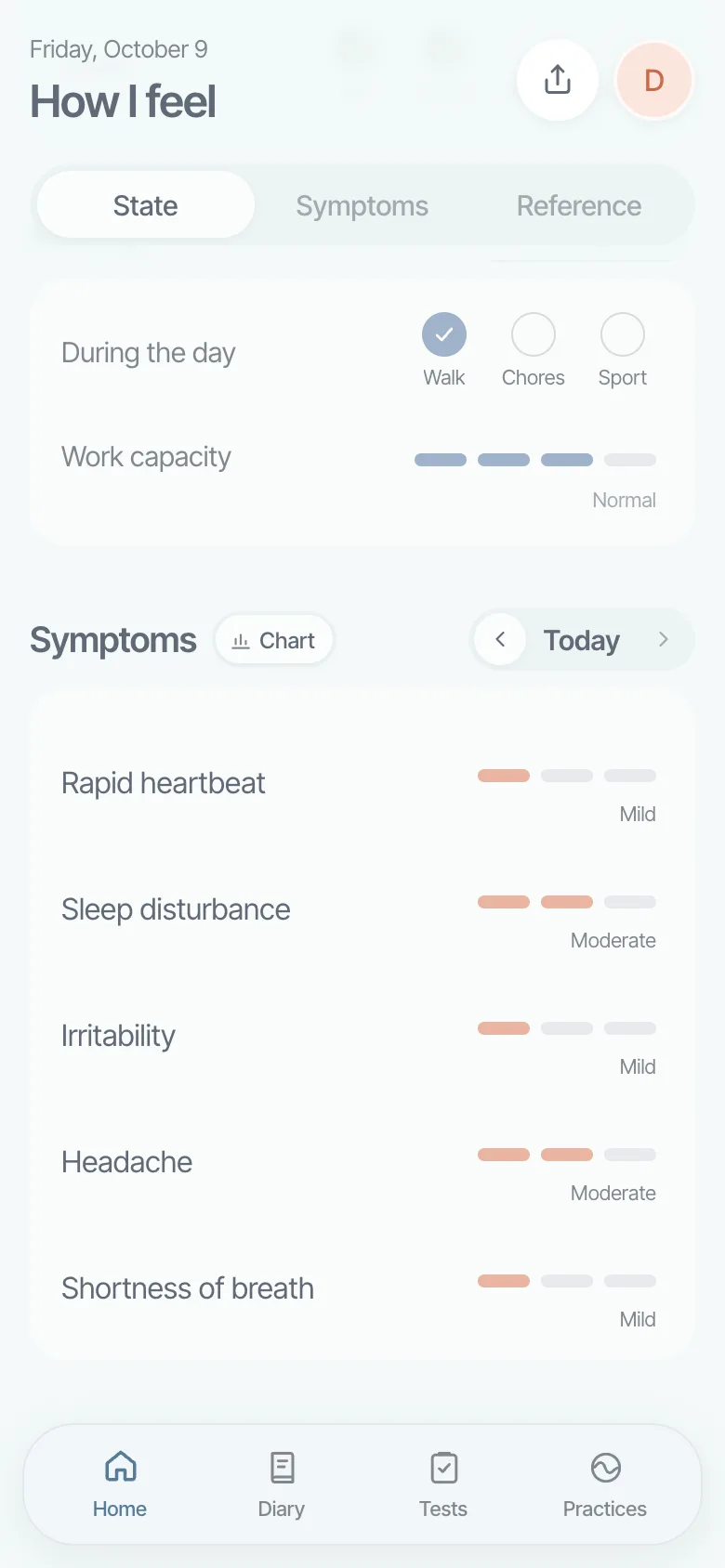
Each day, tap a symptom to mark it mild, moderate or severe. It takes seconds, and after a few weeks you can see which symptoms are fading and which still need attention.
Switch to the chart view to see every symptom across the past days.
Read how others live with the same symptom
Each symptom has comments from people who track it too. Read what it’s like for them and what helps, or share your own experience.
-
Anonymous by default
Other people see only a short user ID. Names, emails and Telegram details are never shown.
-
Likes and reports
Like the comments that helped you. Anyone can report a harmful comment, and comments with more than three reports are hidden.
-
Experience, not advice
Comments are personal stories, not medical advice. Talk to your doctor before changing your treatment.
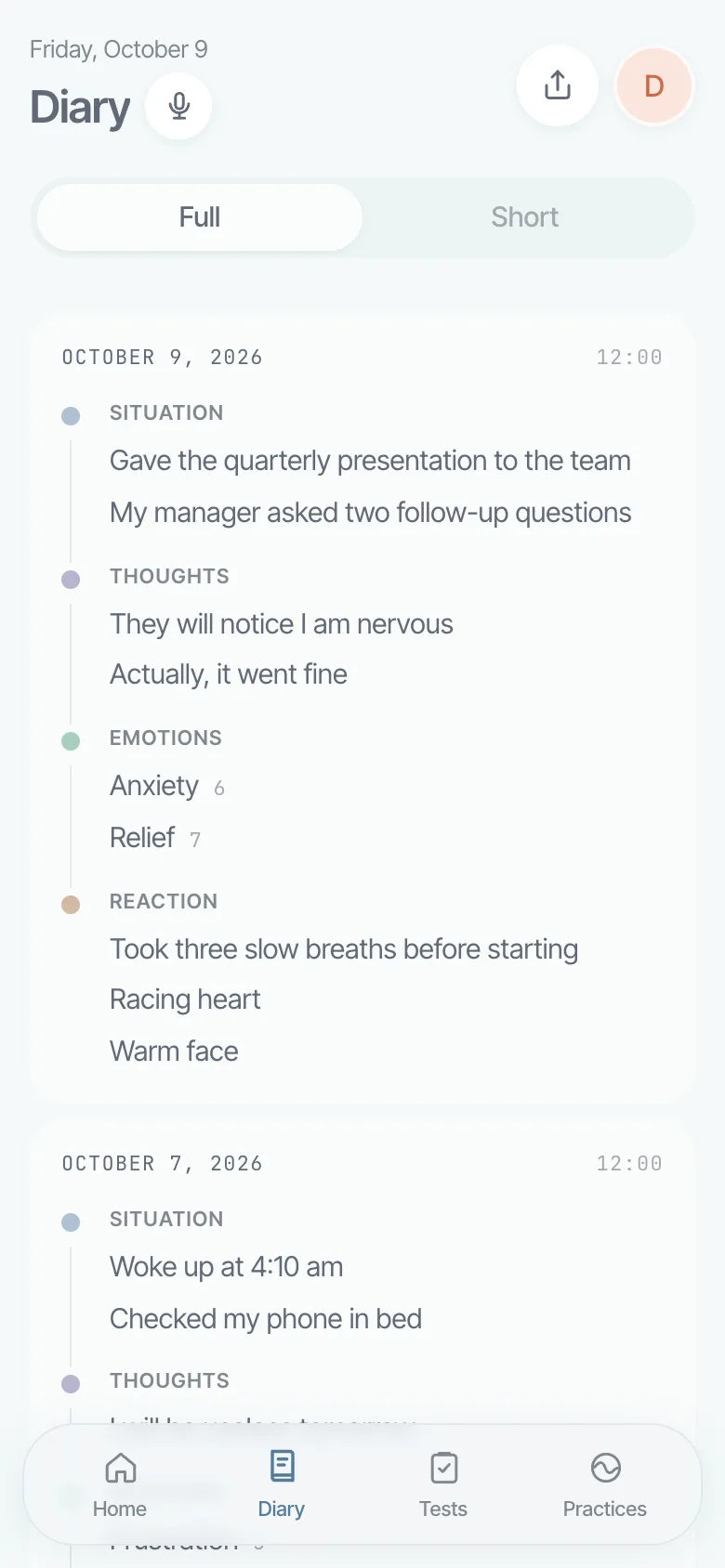
CBT journal with AI
Say it out loud. AI sorts it out
When you’re anxious, filling in a thought record is the last thing you want to do. Just describe what happened by voice in the app or send a voice message in Telegram. Katheris transcribes it and breaks it down using the cognitive behavioural therapy model.
- Situation — only the facts, no interpretations
- Thoughts — your automatic thoughts, in your own words
- Emotions — what you felt and how strongly
- Reaction — what you did and what you felt in your body
The AI works only with what you said and adds no diagnoses or advice. In Telegram you confirm each entry before it’s saved. More about the CBT journal
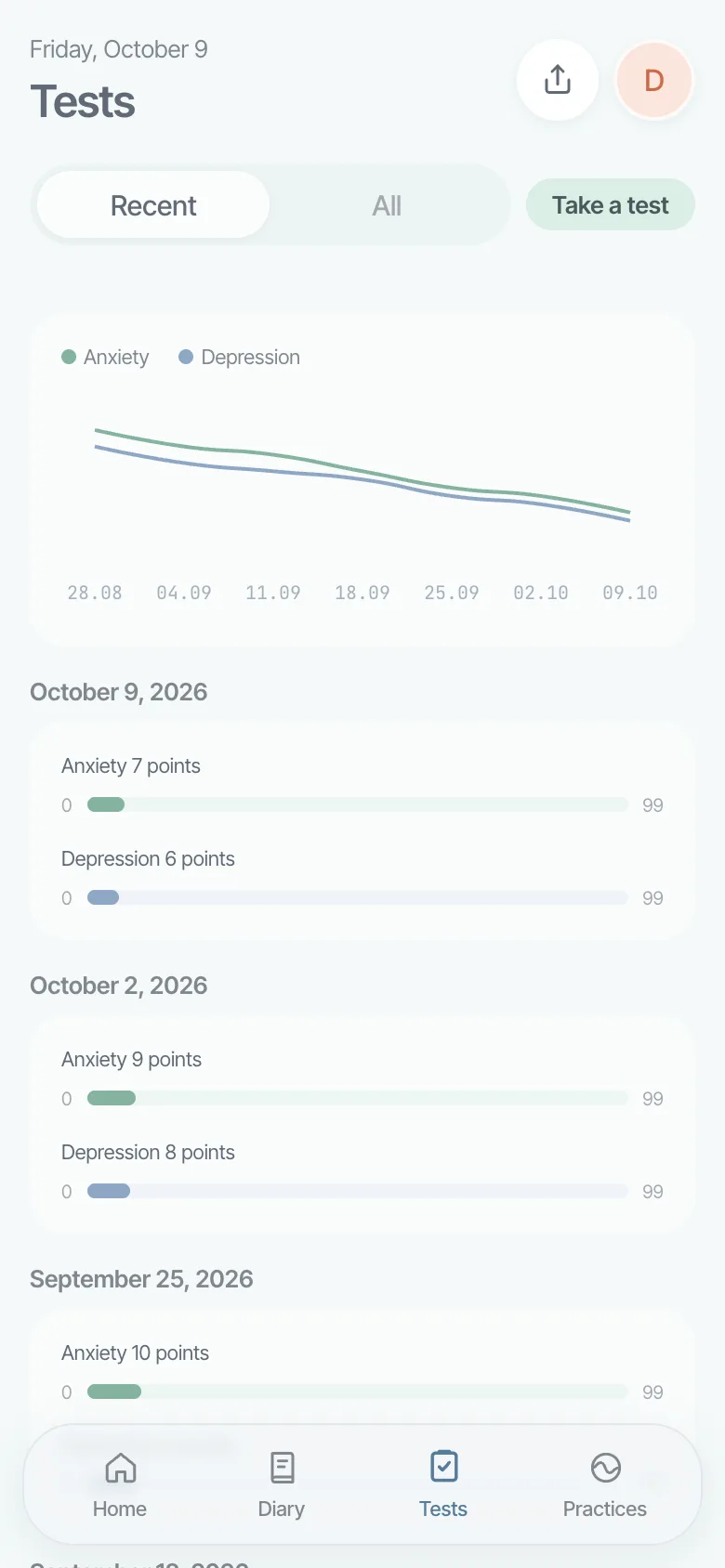
Anxiety and depression tests, once a week
GAD-7 for anxiety and PHQ-9 for depression are the questionnaires doctors use. They take three to five minutes, and Katheris plots every result so you can see the trend.
Read more about the anxiety tracker and the depression tracker.
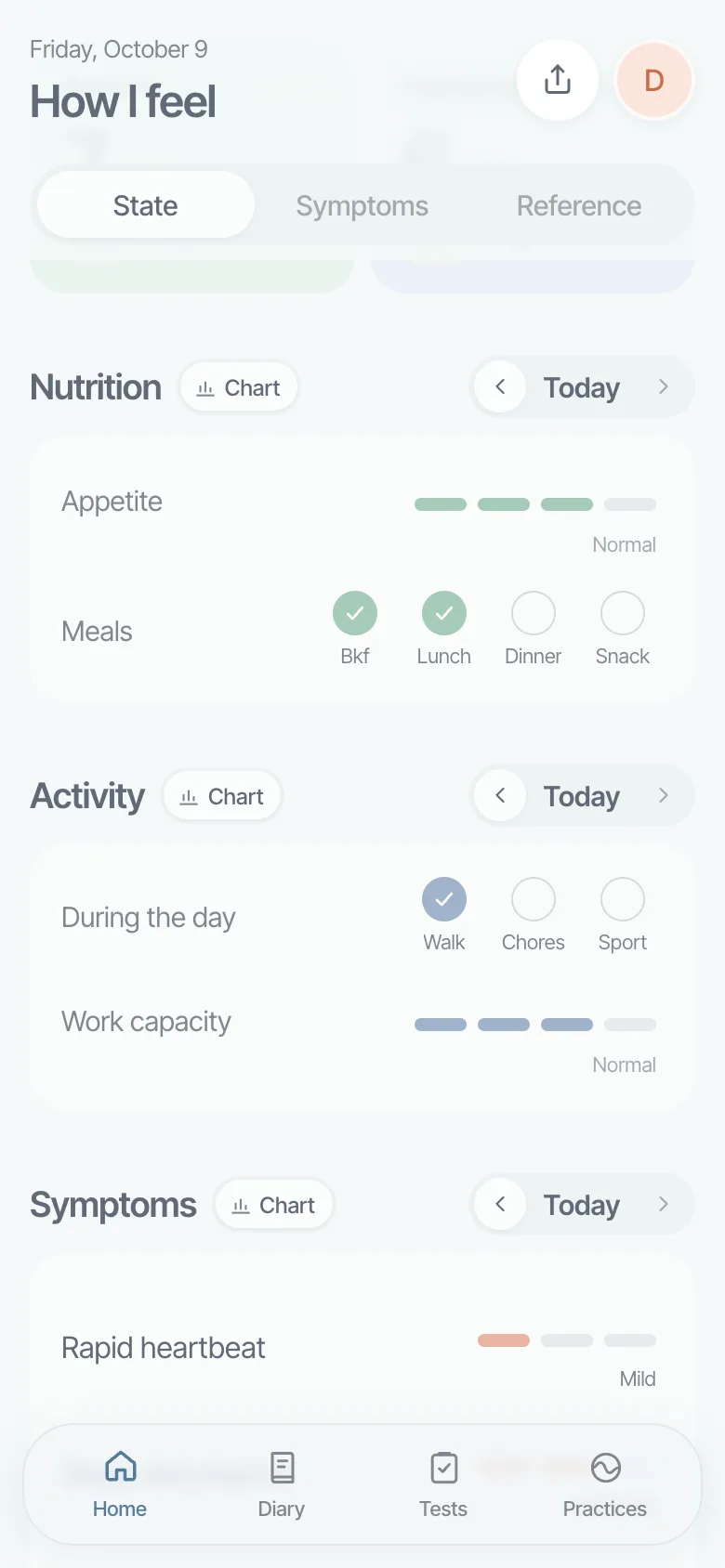
Meals and daily activity
Tick off breakfast, lunch, dinner and snacks, and note walks, household chores or sport. The chart shows how your routine changes alongside your symptoms.
Forgot yesterday? Pick any past day and fill it in.
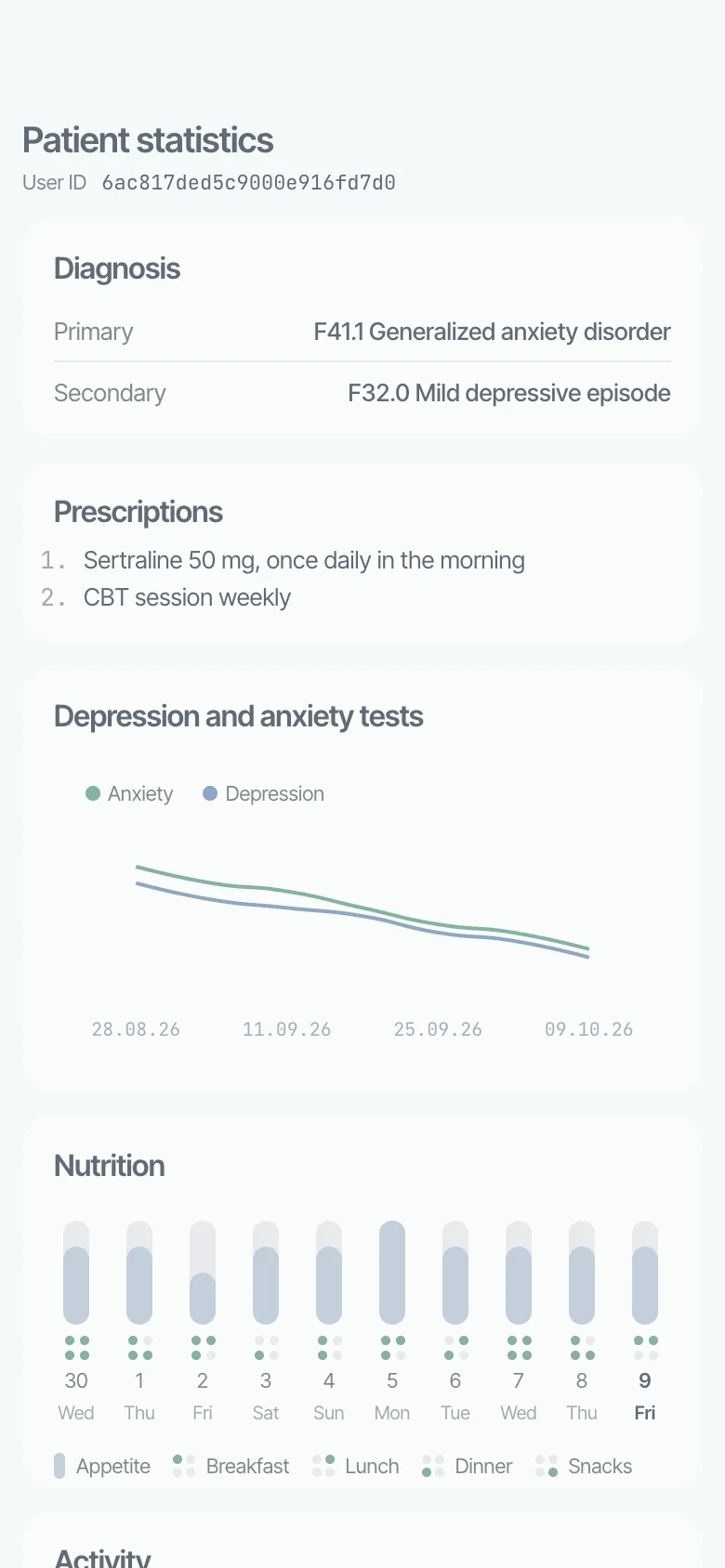
Share your progress with your doctor
Create a private link to a report with your diagnosis, prescriptions, test results, symptoms and daily routine. Send it to your psychiatrist or therapist before an appointment, and they see the whole picture at once.
The link holds a long random key, the report is read-only and shows no name, and it gives no access to your account.
Calm your body in a minute
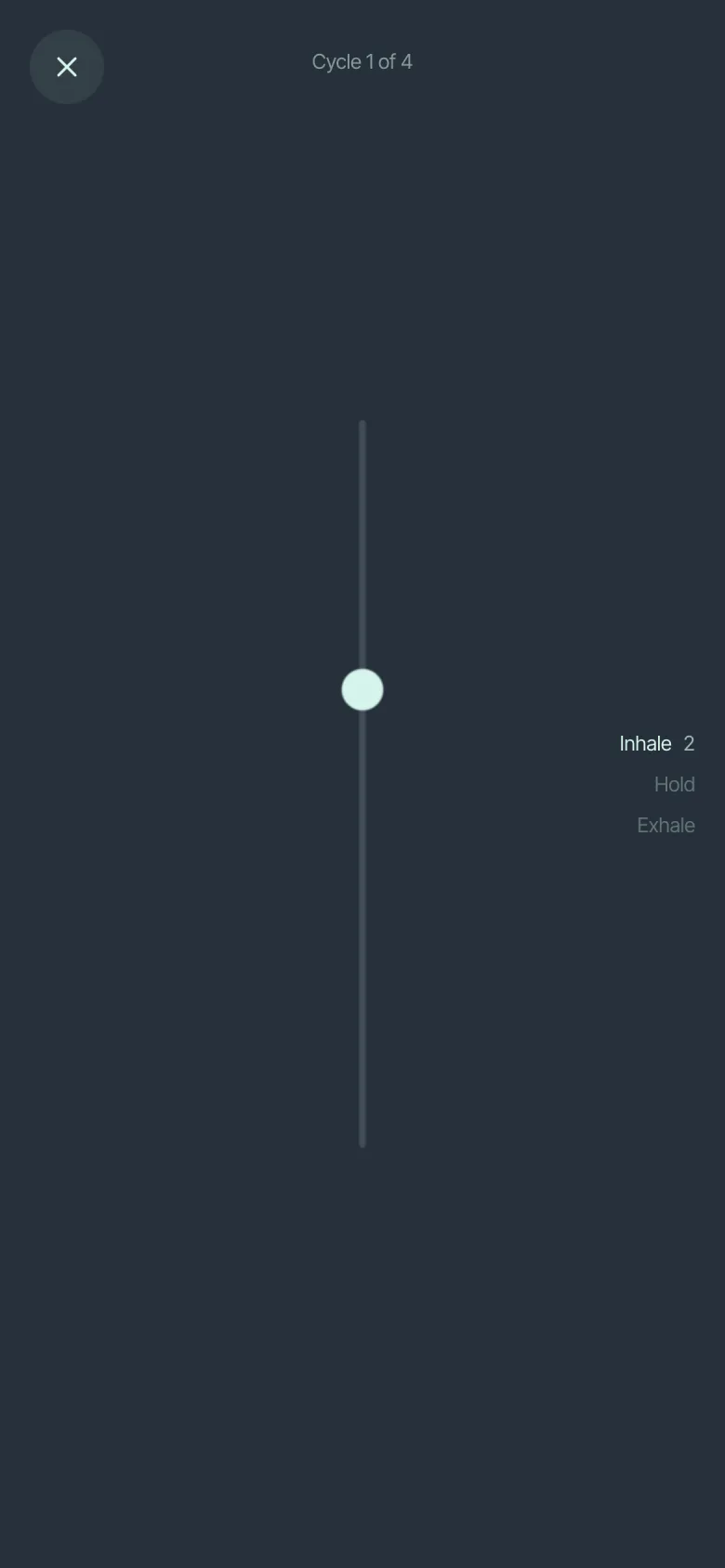
4-7-8 and box breathing guide you with a slowly moving dot and a soft tap at each phase. Tactility lets you press and slide over a field of dots that gives way under your finger.
Afterwards, rate how you feel and see it in your history.

Built to be gentle
- Private
- Your diary and test answers are only used to show your own progress.
- At your pace
- Reminders and daily practices are optional. Change how often they come, or turn them off.
- Clinically grounded
- Scores come from GAD-7 and PHQ-9, standard validated questionnaires.
- Ready for your doctor
- One link shows your charts to a specialist without giving access to your account.
Explore Katheris
- Anxiety trackerBody and mind symptoms, weekly GAD-7 and breathing practices.
- Depression trackerPHQ-9 scores, symptoms and daily routine over weeks and months.
- Symptom tracker46 symptoms in eight groups, rated daily and shown on a chart.
- CBT journal by voiceTalk through a hard moment and get a structured thought record.
Questions people ask
What is Katheris?
Katheris is a mental health tracker for people living with anxiety and depression. You log physical and mental symptoms, take the GAD-7 and PHQ-9 tests once a week and keep a CBT journal by voice, so you can see how your state changes over time.
Is Katheris free?
Yes. Symptom tracking, the GAD-7 and PHQ-9 tests, the voice journal, charts and practices are free in the browser, in Telegram and on iPhone. The free plan covers up to five symptoms and two voice notes a day. Pro, a monthly subscription on iPhone and Android, raises those limits.
What are GAD-7 and PHQ-9?
They are standard, validated questionnaires used by doctors. GAD-7 measures anxiety severity on a 0–21 scale, and PHQ-9 measures depression severity on a 0–27 scale. Each takes three to five minutes.
How does the voice diary work?
You record a voice note in the app or send one to the bot in Telegram. Katheris transcribes it and organises it the way cognitive behavioural therapy does: situation, thoughts, emotions and reaction. In Telegram you confirm the entry before it’s saved. In the app it goes straight to your diary, where you can delete it. More about the CBT journal.
Is symptom tracking the same as a diagnosis?
No. Tracking records what you notice and how strong it is. A diagnosis takes a conversation with a doctor or psychologist, who looks at your history and can rule out physical causes. Your tracking history makes that conversation more concrete.
Does Katheris replace a doctor or therapist?
No. Katheris helps you notice patterns and share your charts with a specialist through a private link. It doesn’t diagnose or treat. If you’re in crisis, contact your local emergency services.
Can I use Katheris as a mood tracker?
Katheris has no single daily mood score. You rate specific symptoms such as anxiety, irritability or sleep disturbance, the voice journal records emotions and their intensity, and weekly tests give a standard score. See the symptom tracker for how ratings and charts work.
Can I take an anxiety or depression test online?
Yes. Katheris includes the GAD-7 anxiety test and the PHQ-9 depression test for free. Each takes three to five minutes, and every result is saved to a chart so you can compare weeks. A test score is not a diagnosis; share it with a doctor to discuss it.
Can Katheris help during a panic attack?
Katheris has short breathing exercises for anxiety and panic, 4-7-8 and box breathing, that slow your breath with a moving dot and a soft tap at each phase. You can also log symptoms like a racing heart or shortness of breath to see what triggers them. If you think you’re in danger, call your local emergency number.
Is Katheris an AI therapist or chatbot?
No. Katheris is a self-help tracker, and you can’t chat with it. AI is used for one task: turning your voice note into a structured CBT thought diary entry with situation, thoughts, emotions and reaction, without diagnoses or advice.
How is my data protected?
Katheris collects only what it needs to run, doesn’t sell your data and doesn’t use health records for advertising. Voice audio isn’t kept after transcription, and data travels over encrypted connections. Share links show no name and give no access to your account. Read the privacy policy for details.
How can I deal with anxiety, depression and overthinking on my own?
Cognitive behavioural therapy suggests writing down what happened, the thoughts that followed and how you felt, then looking for patterns. Katheris keeps that thought diary, tracks your symptoms over time and offers breathing practices. It works alongside professional help, not instead of it.
Which languages does Katheris support?
English, Russian, German, French and Italian.
Start tracking with one check-in today
Open Katheris in your browser, on iPhone or in Telegram, take a short test and mark how you feel. It takes about a minute.